
Faith doesn’t deny the mountain-it teaches us to see it with God in the picture. When we see Him differently, we believe, pray, and speak differently.
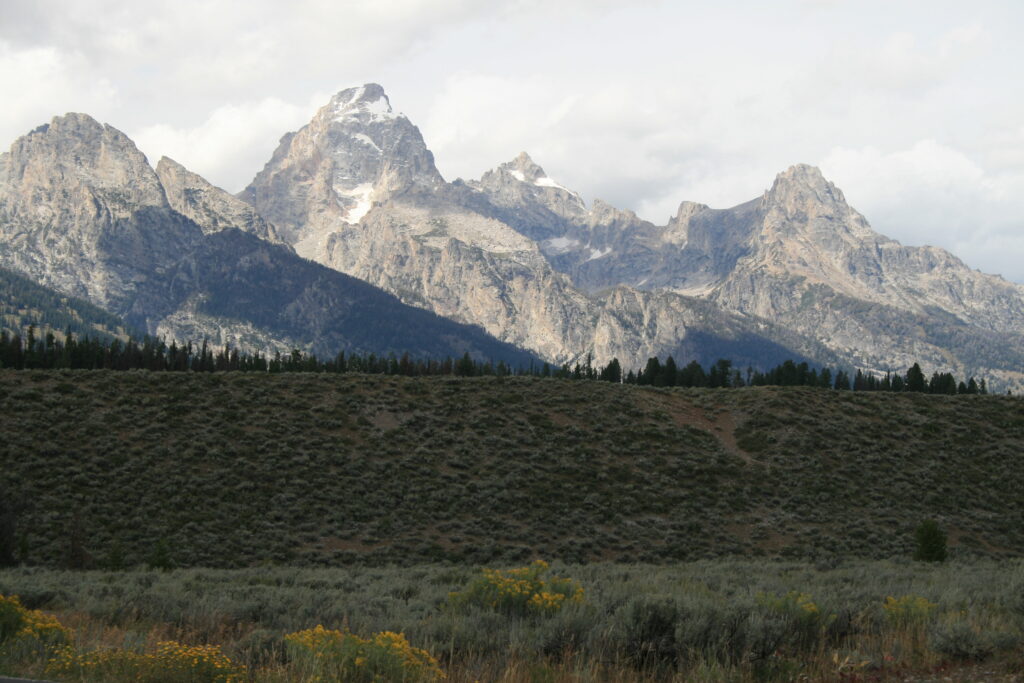
I have been sitting with Jesus’ words in Mark 11:
“Have faith in God.”
They come immediately after Peter notices that the fig tree Jesus spoke to the day before has withered from the roots.
Jesus responds:
“Have faith in God. For assuredly, I say to you, whoever says to this mountain, ‘Be removed and be cast into the sea,’ and does not doubt in his heart, but believes that those things he says will be done, he will have whatever he says.
Therefore I say to you, whatever things you ask when you pray, believe that you receive them, and you will have them.”
— Mark 11:22–24
Something caught my attention.
Jesus talks about speaking.
Then He talks about asking.
And underneath both of them is believing.
I wanted to understand the progression.
Not because I am looking for another formula for faith. In fact, I think that is exactly what Jesus is moving us away from.
I want to understand the mindset of Jesus.
Have Faith in God
The disciples have just watched something astonishing happen.
Jesus spoke to a fig tree.
The next morning, Peter points out that the tree has withered from the roots.
If I had been standing there, I think my immediate question would have been:
How did You do that?
But Jesus doesn’t teach them a technique for speaking things into existence.
He says:
“Have faith in God.”
That changes everything.
The object of faith isn’t my words.
It isn’t my ability to believe without wavering.
It isn’t my understanding of spiritual principles.
It isn’t even faith itself.
It is God.
Everything Jesus says next flows from there.
Faith Sees Differently
The more I have walked with Jesus through Mark, the more I have noticed that He is continually teaching the disciples how to see.
They see five loaves and thousands of hungry people.
Jesus sees provision.
They see a storm capable of killing them.
Jesus sees something that can be silenced.
They hear that Jairus’s daughter has died and there is no longer any reason to bother the Teacher.
Jesus says,
“Do not be afraid; only believe.”
They see a rich man walk away and wonder who could possibly be saved.
Jesus answers:
“With men it is impossible, but not with God; for with God all things are possible.”
Jesus doesn’t deny what they see.
Five loaves really aren’t enough.
The storm really is violent.
The little girl really has died.
The mountain really is enormous.
Faith doesn’t require us to pretend visible reality isn’t real.
It simply refuses to make visible reality the boundary of possibility.
Jesus keeps lifting their eyes.
The Mountain Is No Longer the Largest Reality
A mountain fills your field of vision.
Stand at the bottom of one and you become immediately aware of how small you are.
Maybe that is why Jesus’ first words matter so much:
Have faith in God.
He doesn’t begin with the mountain.
He begins with God.
Because once God enters our field of vision, the mountain is no longer the largest reality we see.
Natural sight asks:
What can happen given the resources available to me?
Faith asks:
What becomes possible if God is actually who He has revealed Himself to be?
That isn’t positive thinking.
It isn’t pretending something isn’t impossible.
Jesus Himself said:
“With man it is impossible.”
He agreed with the natural assessment.
And then He added:
“But not with God.”
Faith doesn’t always change the facts.
Faith changes the horizon.
Jesus Lived From Another Vantage Point
This is what fascinates me about Jesus.
He spoke with extraordinary authority.
He commanded storms.
He commanded demons.
He spoke healing.
He spoke to the fig tree.
But He also withdrew to pray.
He asked the Father.
He thanked the Father.
He listened.
He said:
“The Son can do nothing of Himself, but what He sees the Father do.”
And:
“As My Father taught Me, I speak these things.”
Jesus wasn’t operating a spiritual system.
He was living in relationship with His Father.
He saw.
He heard.
He received.
He knew His Father.
And then He spoke from what He knew.
That makes Mark 11 feel very different to me.
Saying and Asking
At first I wondered why Jesus says:
Say to the mountain…
and then:
Whatever you ask when you pray…
It almost seemed backward to me.
Wouldn’t I first ask the Father what He is doing, see from His perspective, and then speak?
But perhaps Jesus isn’t giving us a chronological formula at all.
He is showing us two expressions of the same faith.
Faith asks.
And faith speaks.
Both flow from:
Have faith in God.
Sometimes faith turns toward the Father and says:
Father…
And sometimes faith turns toward the mountain and says:
Move.
The authority isn’t found in choosing the correct one.
The authority flows from relationship with the Father.
Jesus doesn’t appear anxious about using the right method.
Sometimes He asks.
Sometimes He commands.
Sometimes He touches.
Sometimes He gives thanks.
Sometimes He speaks a sentence.
Sometimes He does something completely unexpected.
There is no reproducible method.
The consistency isn’t the method.
The consistency is His relationship with the Father.
We Speak What We Believe
This is what began to click for me.
What I believe changes what I am willing to speak.
Not because speaking creates reality independently of God.
And not because I need to say the right words enough times to make myself believe them.
But because faith in God begins to change the way I see.
We learn to see from His perspective.
And what we see changes what we believe is possible.
Eventually, what we believe comes out of our mouths.
**We don’t speak in order to make ourselves believe.
We speak because we have begun to see.**
Maybe that is why Jesus spends so much time in Mark confronting the disciples about their perception:
“Do you still not see?”
“Do you not understand?”
“Having eyes, do you not see?”
Again and again, Jesus is teaching them to see.
They keep calculating from what is in front of them.
Bread.
Crowds.
Storms.
Money.
Religious systems.
Mountains.
And Jesus keeps lifting their eyes.
Look at My Father
Maybe this is what “Have faith in God” is really inviting us into.
Not:
Try harder to believe.
Not:
Say the right thing.
Not:
Never acknowledge an impossible circumstance.
Not even:
Learn the principles by which faith produces results.
But:
Look at God.
Because perhaps the problem isn’t always that my faith is too small.
Perhaps the mountain has simply become too large in my field of vision.
I have been staring at what I have.
What I don’t have.
What is possible.
What isn’t possible.
What makes sense.
What can be calculated.
What can be controlled.
And Jesus keeps doing what He did with His disciples.
He lifts our eyes.
You’re still calculating from the loaves.
Look at My Father.
You’re still calculating from the storm.
Look at My Father.
You’re still calculating from what man can accomplish.
Look at My Father.
You’re still staring at the mountain.
Have faith in God.
And something happens when God becomes the largest reality in our field of vision.
We begin to see differently.
And when we see differently, we begin to believe differently.
When we believe differently, we begin to ask differently.
And eventually we become willing to speak things we never would have dared to say when the mountain was still the biggest thing we could see.
Not because we have mastered faith.
But because we have come to know the Father.
**Faith doesn’t teach me how to deny the mountain.
Faith teaches me to see the mountain with God standing in the picture.**
And with God, the horizon of possibility changes.
In everything you do -eat, play, and love- may it always be Seasoned with Joy!
Let’s Continue to Go Deeper Together…
This post contains affiliate links, which means I make a small commission at no extra cost to you. Unless stated otherwise, I will only recommend products I personally enJOY. See my full disclosure here.