
Look around, it’s springtime. Violets are everywhere. Foraging for Spring Violets is a happy way to capture the essence of spring with your children, and enJOY the many benefits they bring.
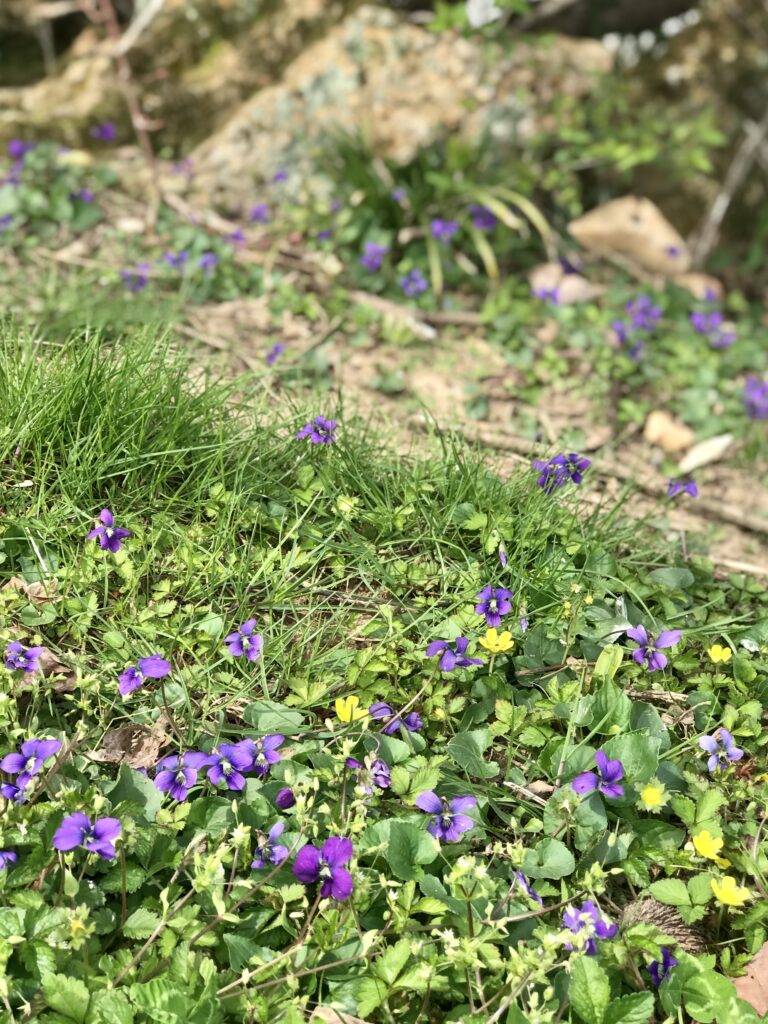
Foraging Violets and How to Identify Them
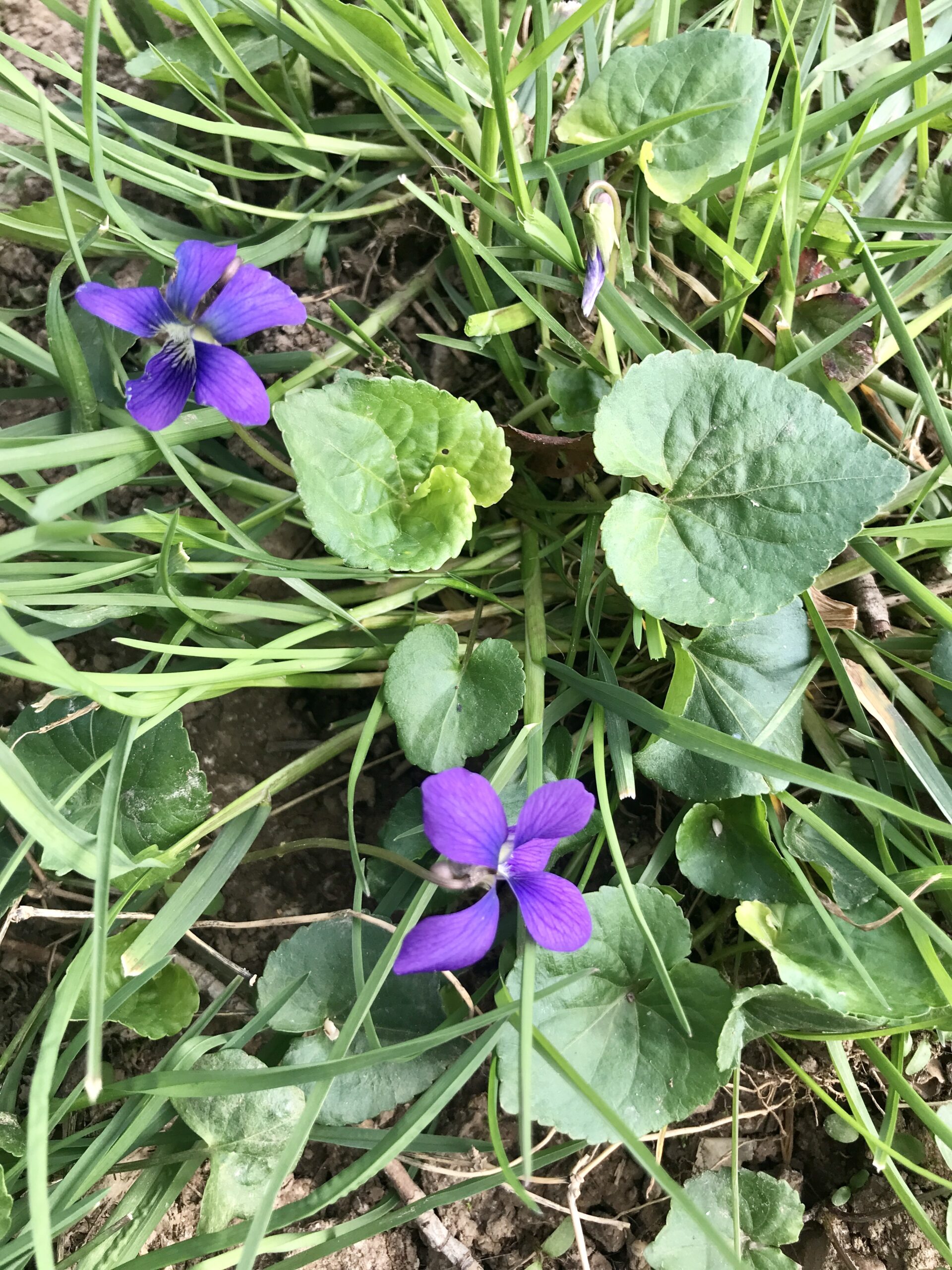
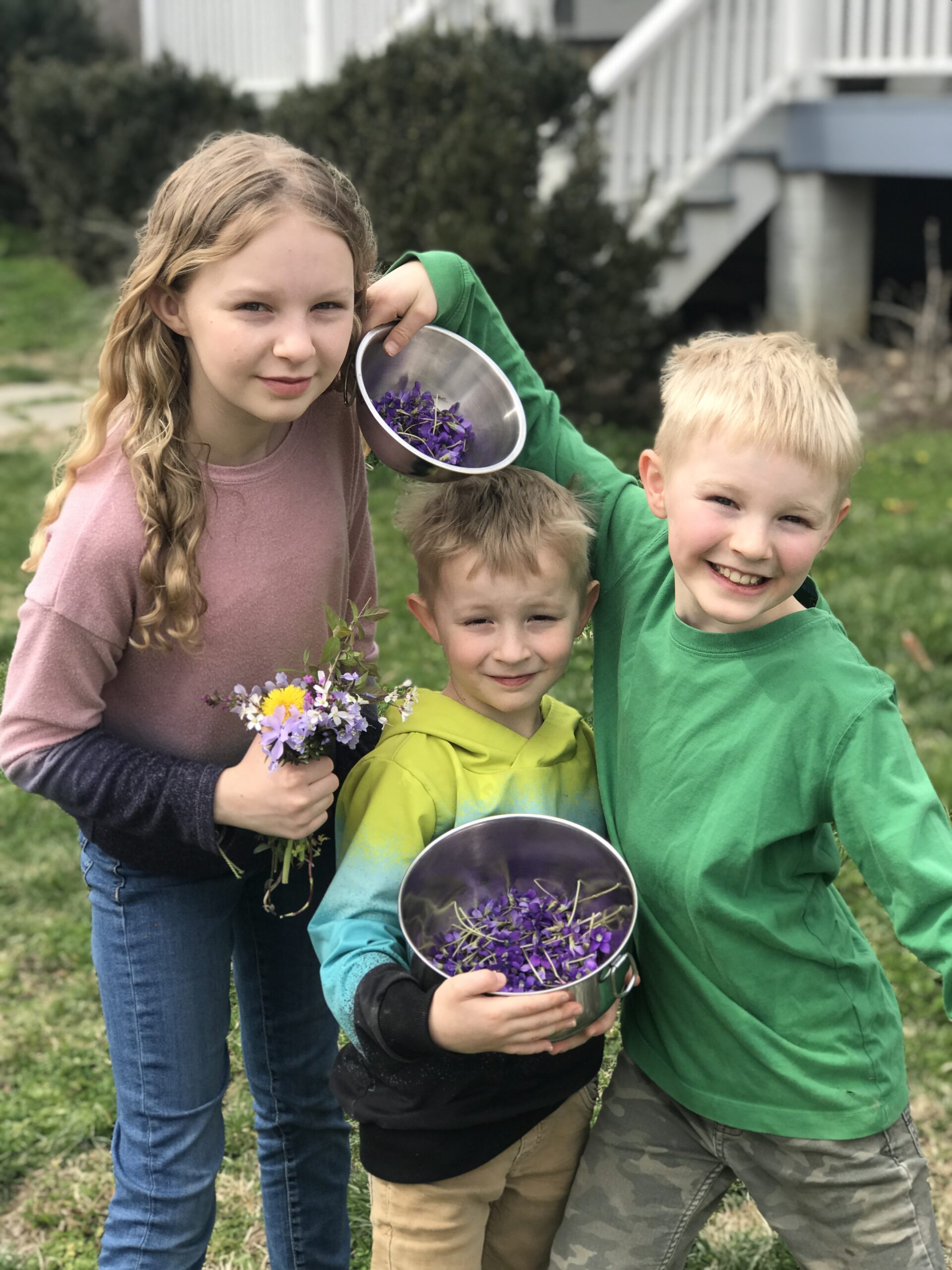
Have you ever sat quietly in the middle of a field of violets? Try it sometime and see if your heart doesn’t just sync with the rhythm of nature. Violets are in abundance in the early springtime. With their heart shaped leaves and purple, white, or even yellow petals, not only are they beautiful in the landscape, but they are good to eat. They are a low-growing flower that are prolific in the spring. This means that the more you cut, the more they grow back. Just be sure to not cut back all the leaves and flowers so they can continue growing.
Is it safe to eat wild violets?
Yes! Properly identified violets in the Viola genus have edible flowers and leaves. Before eating any wild plant, however, make sure you have positively identified it and are confident that it is an edible species.
Be careful where you forage them too. Avoid areas along busy roads or heavily traveled paths, as well as lawns or fields that may have been treated with pesticides or herbicides. You’ll also want to steer clear of areas you know your favorite canine has marked for his territory (if you catch my drift).
An unsprayed area of your garden, or another clean location where you have permission to forage, is ideal. Gently wash your violets before using them.
Teach children never to taste a wild plant until a knowledgeable adult has positively identified it.
Supportive Properties of Violets
So much is there to discover when we slow down and really look at what is growing around us. Isn’t God a genius?
Violets aren’t just beautiful—they are edible too! The leaves and flowers contain vitamin C and beneficial plant compounds, making them a lovely seasonal wild food to enjoy in the spring.
Violets also have a long history of use in traditional herbalism. Herbalists have traditionally used the leaves and flowers in preparations intended to soothe irritated tissues, including the throat and skin. You’ll find violets used in everything from teas and syrups to infused oils and salves.
I also love their heart-shaped leaves. Historically, herbalists sometimes looked at the shape, color, or characteristics of a plant and believed these offered clues to how the plant might be used—a concept known as the Doctrine of Signatures. While we now know that a plant’s appearance doesn’t tell us its medicinal properties, I still find tremendous delight in noticing these patterns in creation.
Violets: Oh the Many Things You Can Do…
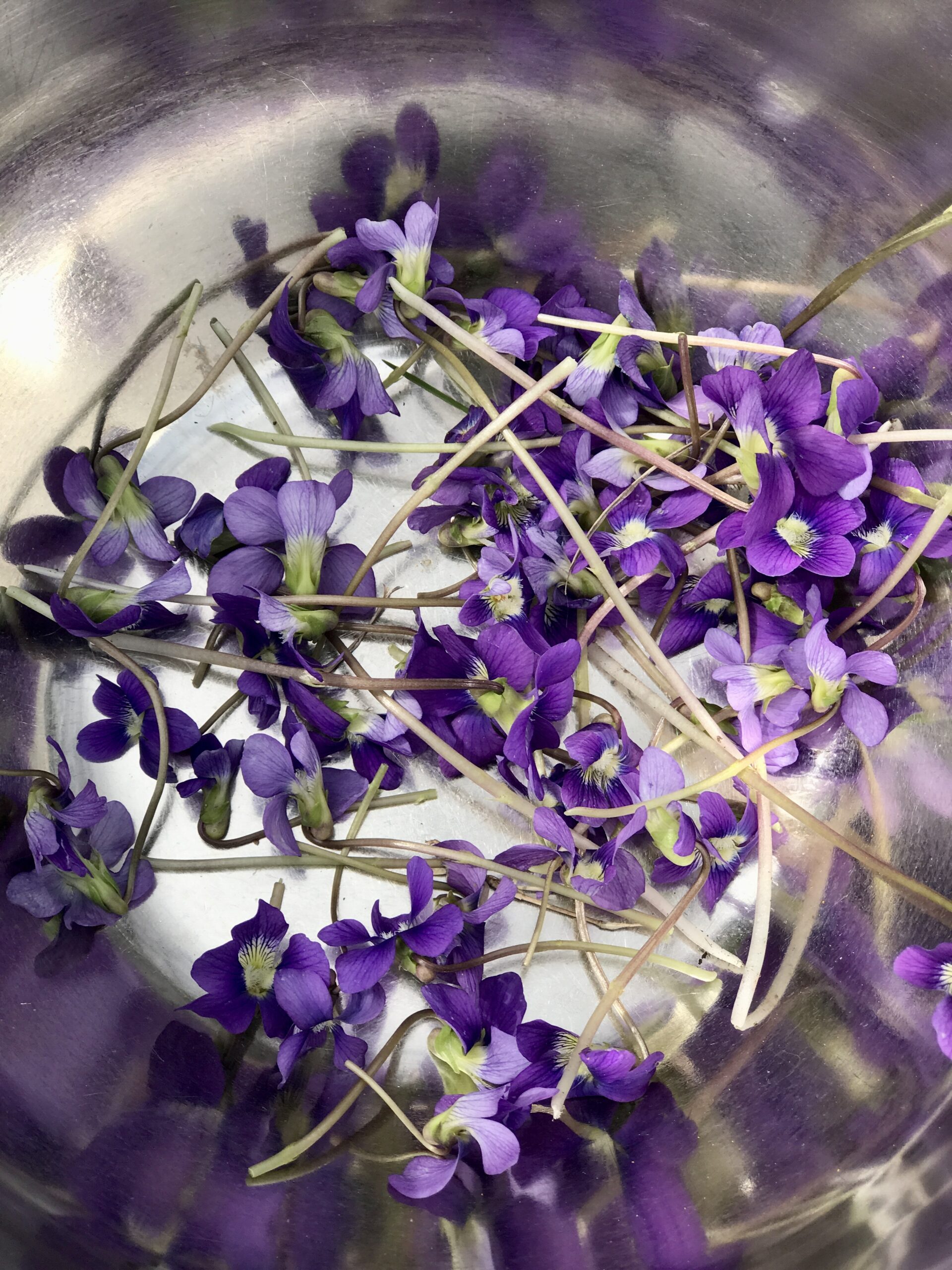
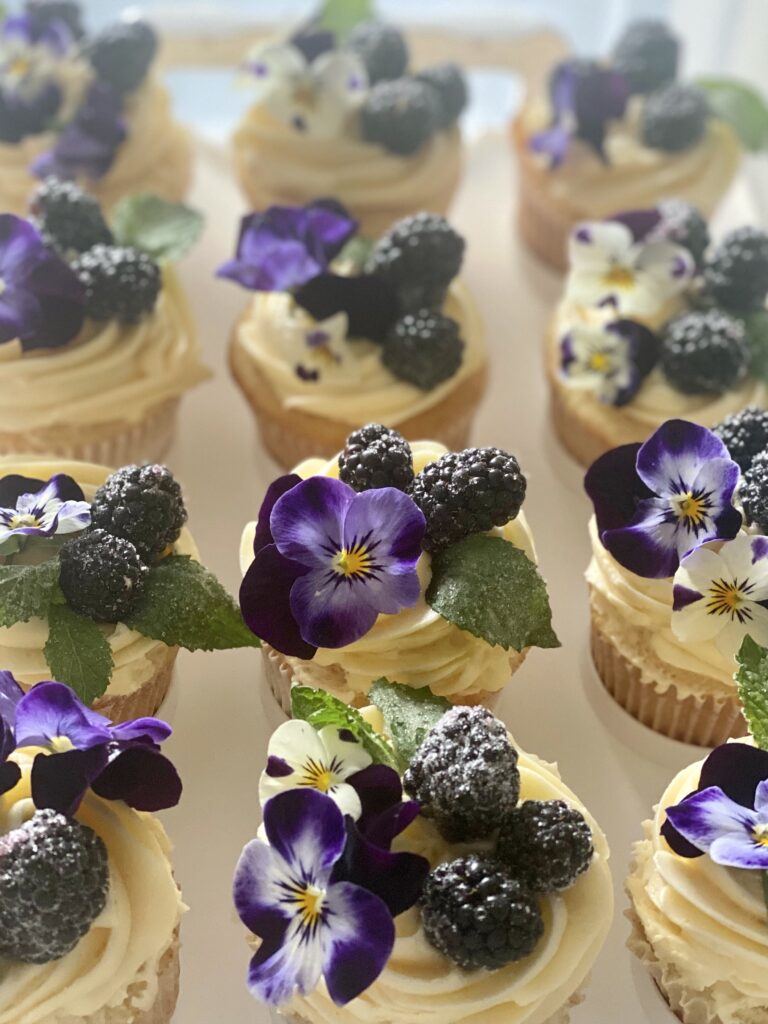
There are so many wonderful things to do with violets. Not only is it a fun time out in nature with the kids collecting these beautiful, edible flowers, but there are so many activities and recipes you can do with your violet treasures after you have gathered them. Besides garnishing your fresh, spring salads with these purple pops of pleasure, or decorating your favorite baked goods like these cupcakes, there are many simple recipes you can prepare along with your children.
Infusion and Syrup
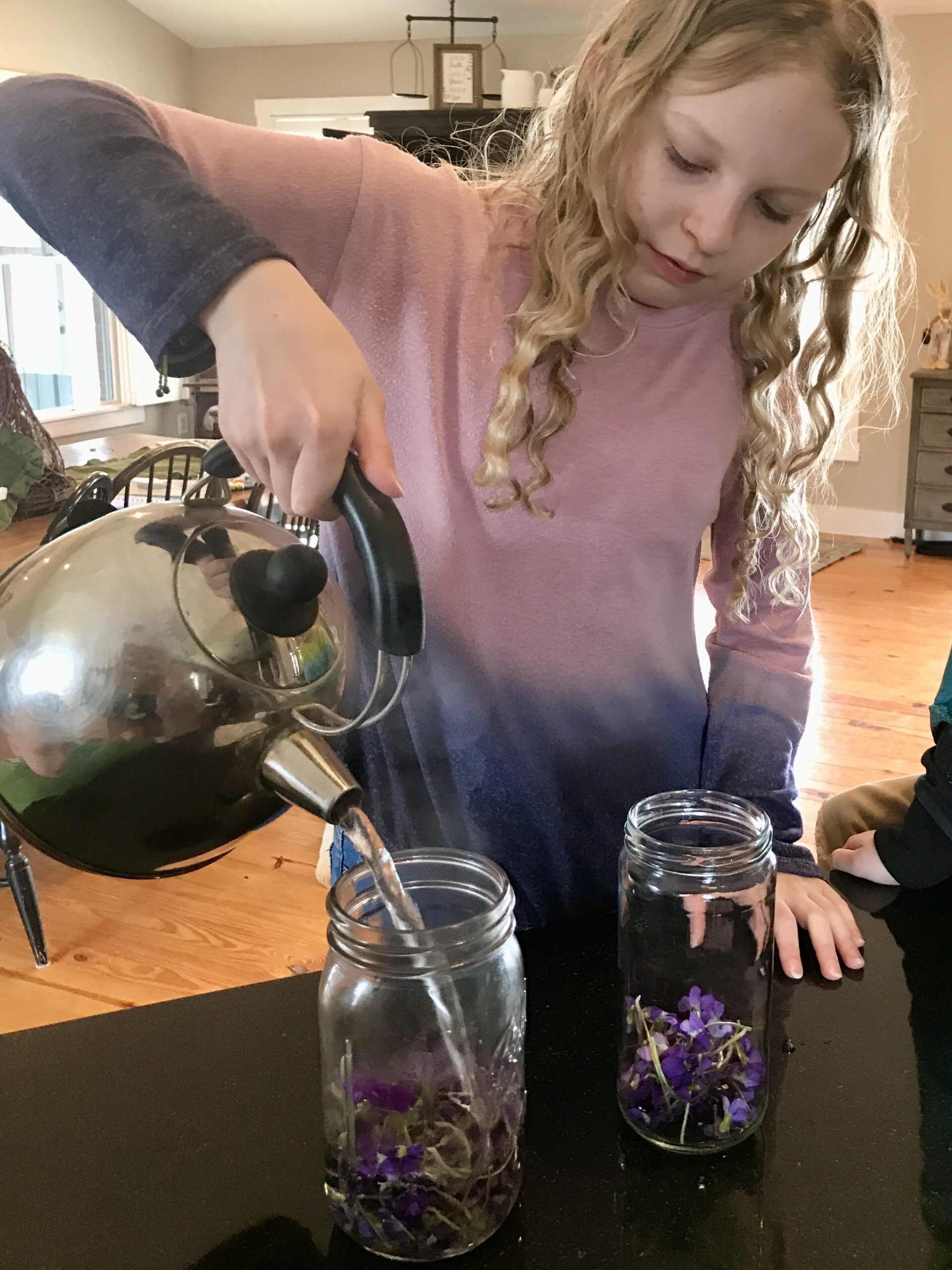
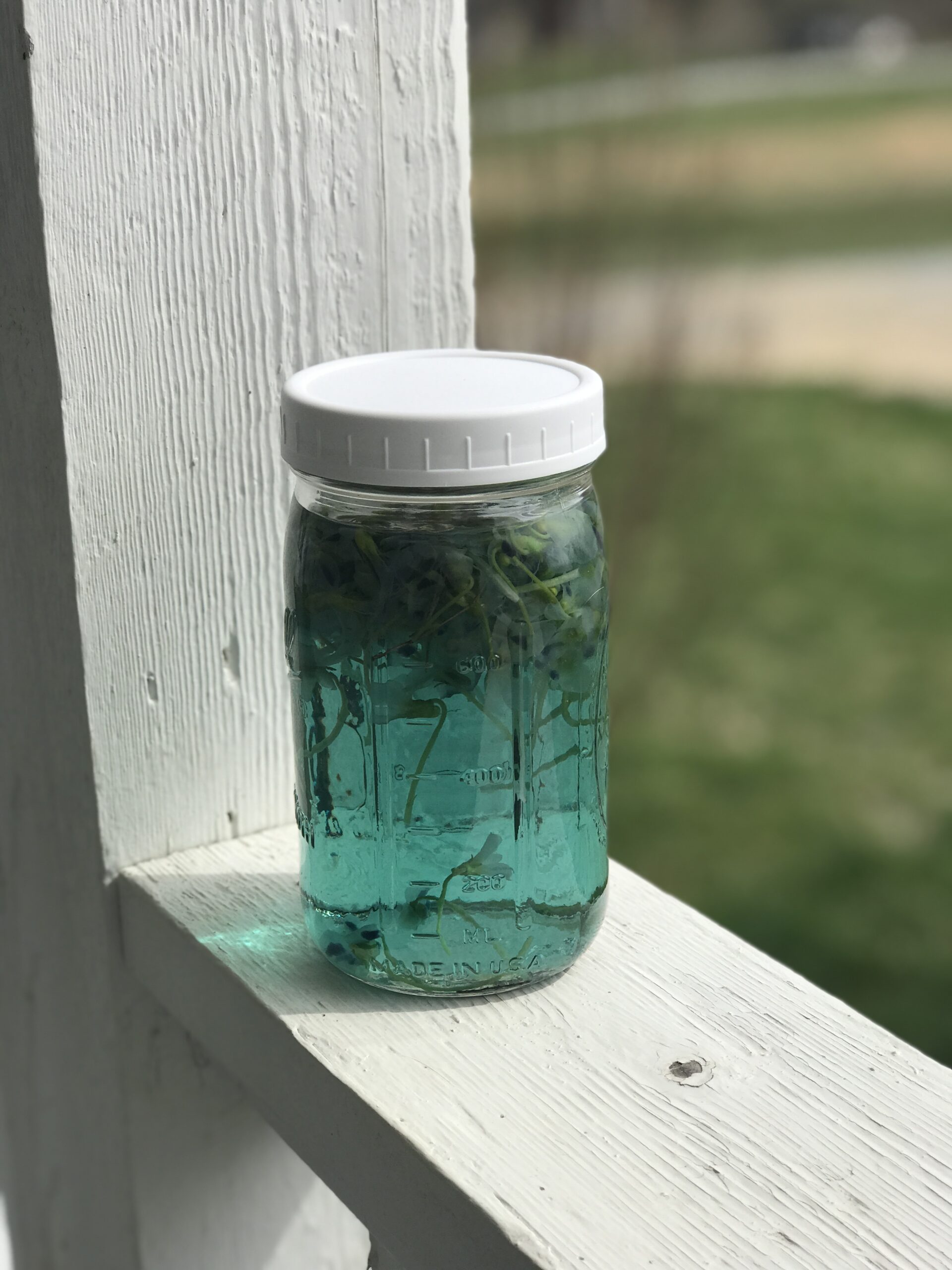
Preparing a violet syrup to mix with sparkling water is a tasty way to celebrate spring. The children enJOY preparing it and watching the beautiful aquamarine color emerge.
Place fresh, clean violet flowers in a heat-safe quart-sized jar and cover with boiling water. Cover and allow the violets to steep until the water has cooled and the color and flavor have infused, then strain. If you aren’t using the infusion right away, refrigerate it rather than leaving it at room temperature for several hours.
You can drink the violet infusion as a tea or turn it into a simple syrup. Gently warm 1 cup of strong violet tea and stir in 1 cup of honey until dissolved. Allow to cool and store in the refrigerator.
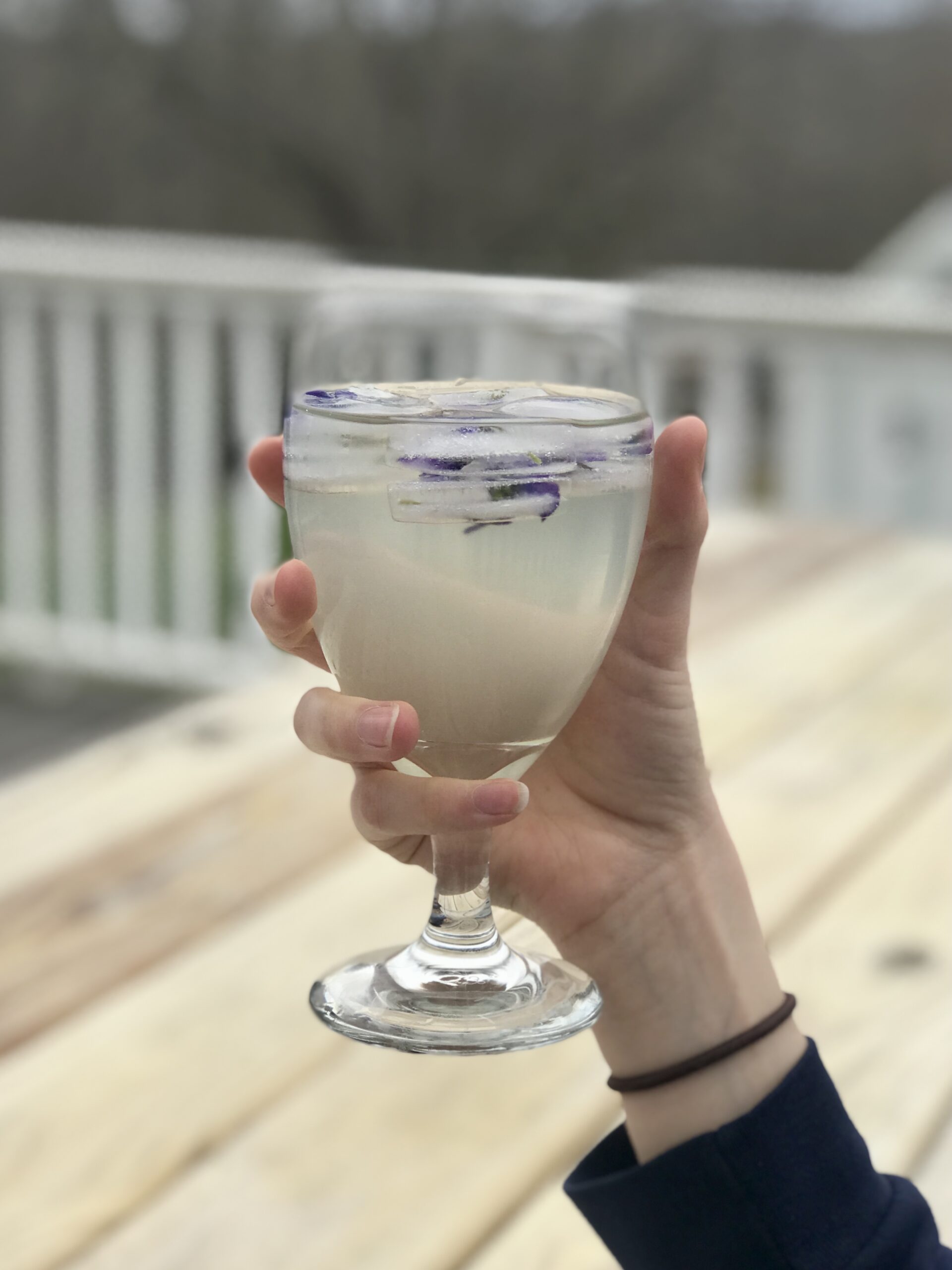
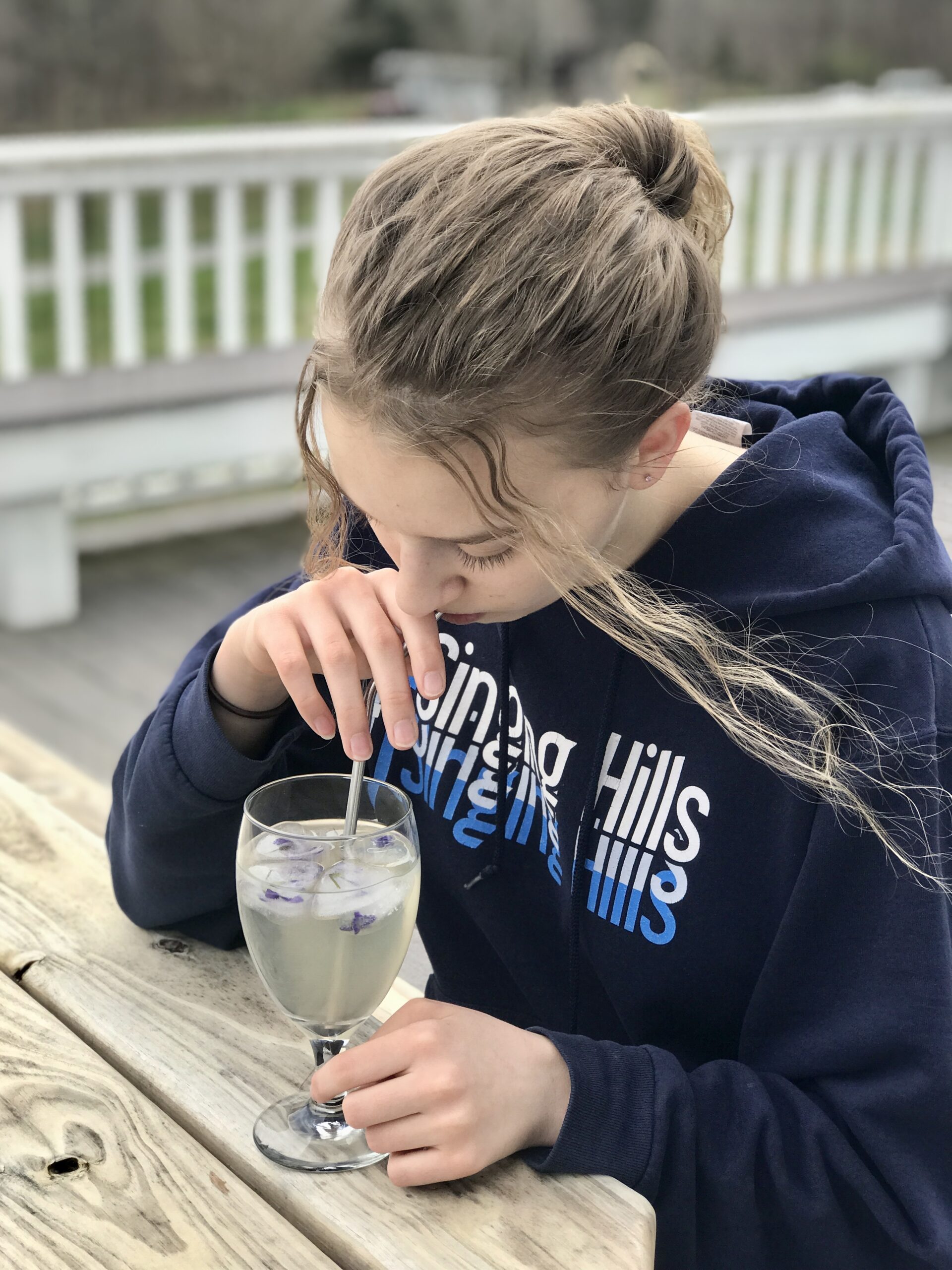
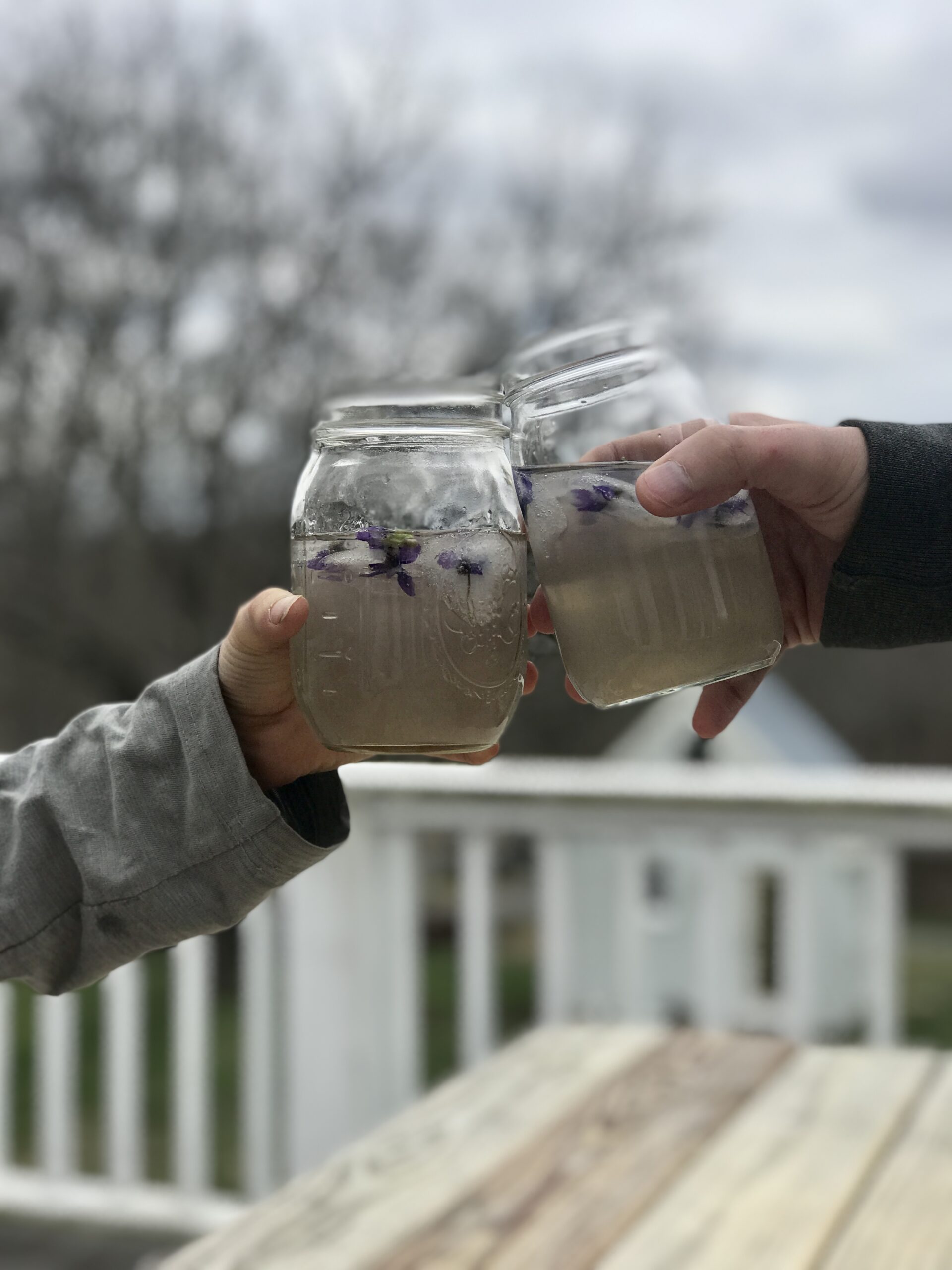
To serve, mix 1 part violet syrup with about 3 parts sparkling water, adjusting to taste, for a beautiful and refreshing spring drink.
Violet Ice Cubes
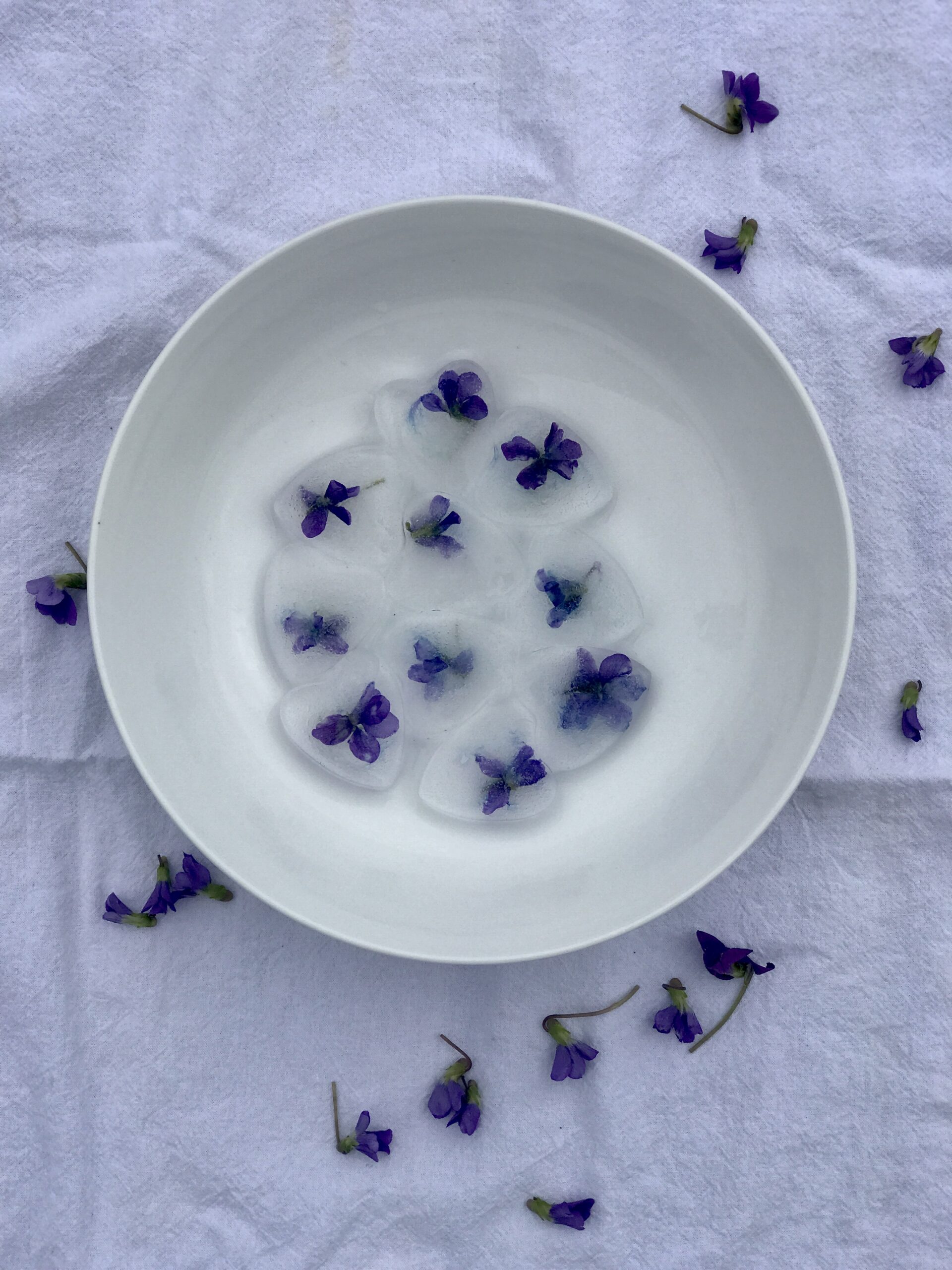
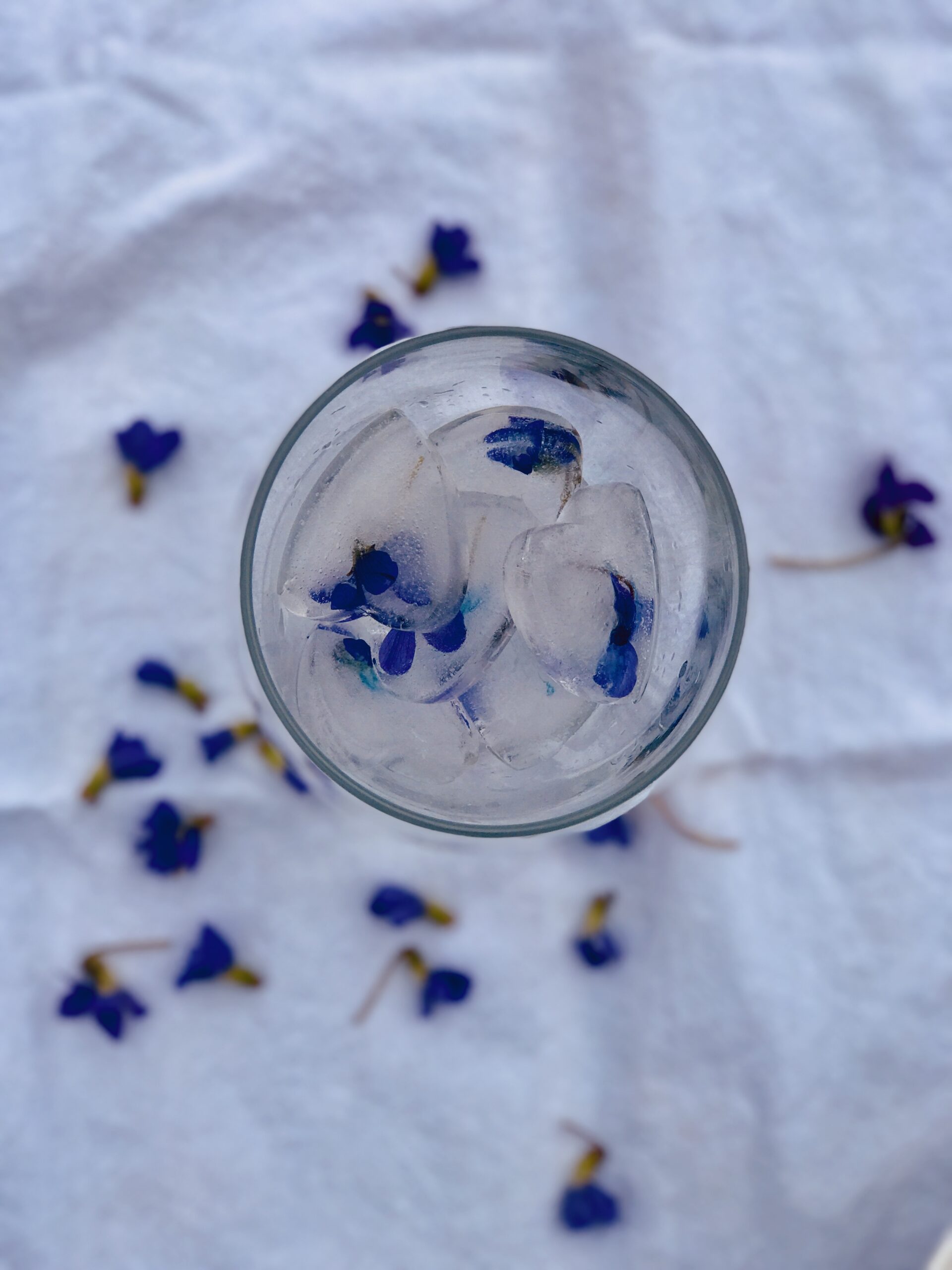
Want to make your Violet Fizzy Water fit for the fairies? Violet ice cubes are simple. In an ice cube tray place a violet in each compartment. Fill half full with filtered water and freeze for 2 hours. Once the flowers have frozen into the water, fill the remaining compartment full of water and freeze another 2 hours. Then, pop out and serve.
Pressing Flowers
Violets dry beautifully. Pressing the flowers and leaves between waxed paper underneath large books is an easy and economical way to press flowers. It only takes a week or two to fully dry. You could go all out and buy a flower press, but I have always found it easy to press them this way. You can use your dried and pressed flowers to decorate homemade cards or frame them in an arrangement as we did to bring a little bit of the springtime into our home decor. Either way, preserving the beautiful violets is a fun way to capture their brief visit with a lovely keepsake.

Herb Fairies: Botany & Herbalism for Children
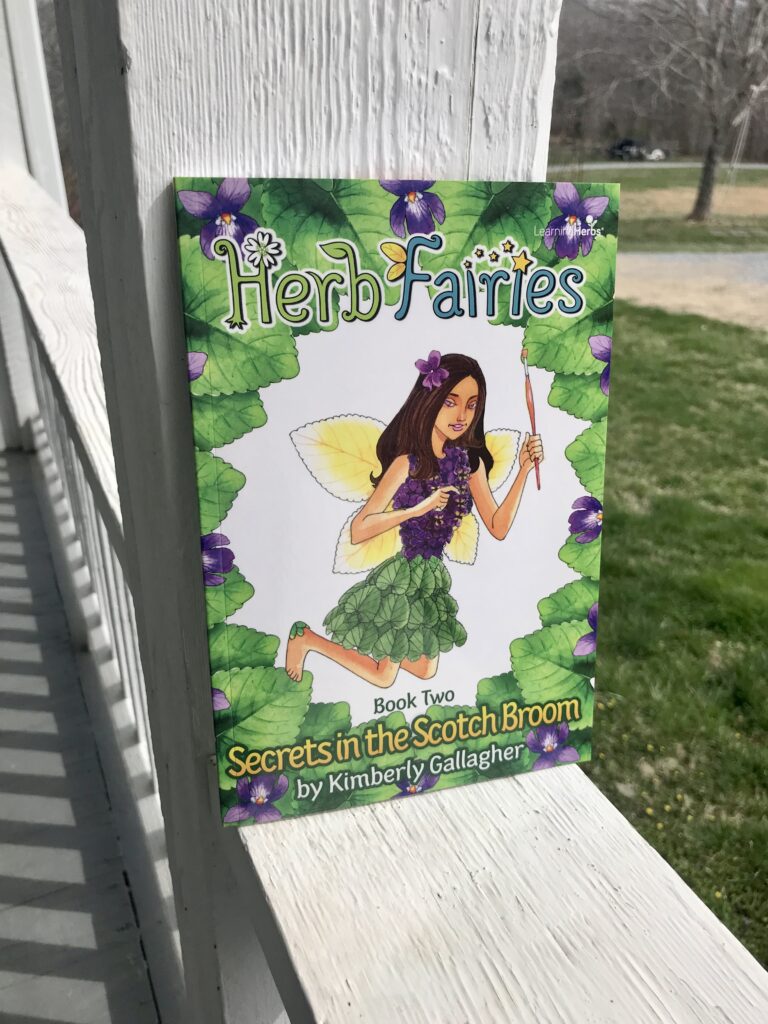
If you haven’t heard about Herb Fairies from Learning Herbs, I encourage you to check it out. Designed with twelve different featured herbs, one for each month, according to the season, children dive into the world of herbs through a story of the herb fairies. Brilliantly thought out, the stories are delightful. The package includes everything from recipes, coloring pages, to practical ways of incorporating each herb into daily life. Our children have loved learning about dandelions, chickweed and violets in the spring, calendula, plantain, lemon balm and elderberry in the summer, and even pine in the winter months. What a fun way to empower your children with the ability to forage and use the herbs they find all around them in nature.
For example, my children have grown up learning about herbs. One afternoon, my son was stung by a bee while playing ball. He started to freak out because of the pain. I yelled from across the yard, “You know what to do. There is no need to fear.” He stopped screaming and immediately went looking for plantain. He picked it, chewed it up in his mouth making a spit poultice, and immediately applied it to his sting. The pain instantly was gone and he was off playing without another thought. Knowledge is power.
Wildcraft: Botany & Herbalism Game for Children
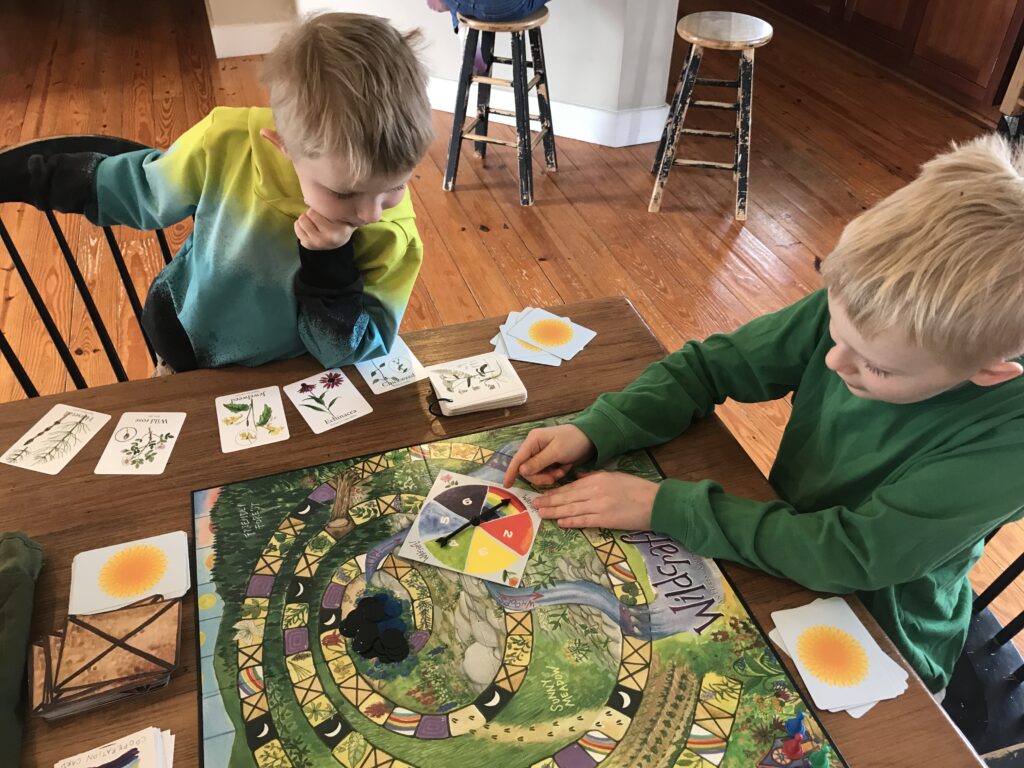
I have to say, I love herbs and have been busy taking a course to eventually become a master herbalist. Because I love herbs, my children have grown up with them all around us. In fact, Wildcraft, a game developed by Learning Herbs, is a favorite that is pulled out often. Together the children have to make their way to the huckleberry patch to gather berries so grandma can bake a pie. Along the way, they run into issues such as bee stings, fatigue, poison ivy, and fear, and they have to collect the remedies to cure their ailments. In the process of working together, the children become familiar with herbs and their uses. It is a delightful game they want to play again and again.
Shop This Post
In everything you do -eat, play, and, love- may it always be Seasoned with Joy!
This post contains affiliate links, which means I make a small commission at no extra cost to you. Unless stated otherwise, I will only recommend products I personally enJOY. See my full disclosure here.