

I’ve been thinking a lot about friendship lately.
Not simply about who my friends are, but why we become friends in the first place.
What draws two lives together?
Why do some friendships accompany us for a particular season while others somehow keep growing through decades of change?
What makes someone a good friend?
And perhaps the question I’ve been asking most:
How do we love people well enough that there is room for both of us to keep becoming?
When I look back over the landscape of my life, I can see seasons of friendship much more clearly than I could while I was living them.
When my husband and I were first married and beginning our family, many of our friendships were formed around a common mission.
We were raising children.
We naturally gravitated toward families who were trying to build similar homes. We were learning how to parent, homeschool, create family culture, love our spouses, and follow God while little people depended on us for nearly everything.
Our children played while we talked.
We traded ideas and recipes and convictions. We encouraged one another when parenting was hard. We celebrated births and birthdays and holidays and ordinary Tuesday afternoons.
There was laughter and purpose intertwined.
And I think that’s important.
Friendship isn’t meant to become so intentional that every cup of coffee needs a mission statement.
Sometimes friendship is eating something delicious, laughing until your stomach hurts, seeing a movie, wandering through a shop, or sending a picture because you immediately thought, She would love this.
Those things make life beautiful.
But I’m discovering that the friendships I hunger for most deeply have something underneath all that enjoyment.
We are becoming together.
The Seasons That Bring Us Together
So many friendships begin because life puts us in the same place.
Children become friends with the children next door.
Teenagers become friends with the people they see at school every day.
Young mothers find other young mothers.
Coworkers spend eight hours a day solving the same problems.
People serving together in ministry grow close.
Neighbors become friends.
Two people walking through similar grief somehow find each other.
Shared circumstances give us a place to begin.
But circumstances change.
Children grow.
Graduation comes.
Someone moves.
Jobs change.
Ministry ends.
The crisis resolves.
The project gets completed.
And eventually the structure that naturally kept two people in each other’s lives may disappear.
Then we discover something.
Sometimes underneath that shared season is a friendship capable of becoming something new.
And sometimes the season itself was holding much of the relationship together.
I don’t think that necessarily means the friendship failed.
Ecclesiastes says:
“Two are better than one… If either of them falls down, one can help the other up.”
— Ecclesiastes 4:9–10
There are people God gives us who help us across a particular stretch of road.
Some friendships are forged in a furnace. We walk through grief together, raise children together, survive a difficult season together, build something together, or help one another through enormous transition.
Those relationships can be profoundly real even if they don’t remain equally close forever.
Perhaps part of maturity is learning to honor what a friendship was without requiring it always to remain what it has been.
But there are other relationships that meet in the furnace and discover, once the fire has died down:
Oh. I still want to know you.
And I think that’s something different.
When Intimacy Isn’t Mutuality
This has been particularly interesting for me to consider because my husband and I were pastors.
Titles do strange things to relationships.
Pastor.
Counselor.
Doctor.
Teacher.
Mentor.
People may genuinely love the person holding the title, but they may also initially be drawn to what that person carries.
When we were pastors, people came to us with their marriages, children, fears, decisions, disappointments and questions about God.
We were invited into extraordinarily vulnerable places.
We cried together.
We prayed together.
We walked with people through some of the most difficult moments of their lives.
And vulnerability can feel like friendship.
But I’m learning that knowing someone’s pain isn’t necessarily the same thing as knowing one another.
Crisis can create intimacy without creating mutuality.
Sometimes when the crisis ends, so does the relationship.
That doesn’t necessarily mean anyone was intentionally using anyone else.
Perhaps they needed something we carried.
We loved them and gladly gave it.
And when they no longer needed it, the natural reason for proximity disappeared.
Understanding this has helped me look at old relationships with more grace.
Not every person who leaves was false.
Not every friendship that changes was a failure.
Some people really were companions for a particular stretch of road.
But it has also caused me to ask a different question:
What turns companionship into a friendship capable of growing beyond the season that formed it?
Friendship Requires Two Revealed People
I have spent much of my life being the person others come to.
I listen.
I ask questions.
I encourage.
I help people make sense of what they’re experiencing.
I teach.
And those are parts of myself I genuinely love.
But I’ve begun realizing that I can do all of those things without ever allowing someone to know me.
If someone else is hurting, I instinctively put my hurt on the shelf.
Their need seems greater.
Their situation seems harder.
So I become the good friend.
The strong friend.
The wise friend.
And slowly a relationship can develop in which one person is continually being revealed while the other is continually being useful.
That’s not mutuality.
For years I thought being a good friend meant being available to what was inside someone else.
I’m beginning to understand that friendship also requires allowing what is inside me to be known.
My questions.
My fears.
My dreams.
My disappointments.
My discoveries.
The things I haven’t figured out yet.
Not merely the polished wisdom that comes afterward.
Friendship requires two revealed people.
And that means mutuality isn’t something we simply find in the right person.
It’s something we have to practice.
We Need Safety to Be Revealed
This is where I’ve begun thinking differently about safety.
Safety can become a vague word.
It doesn’t mean nobody disagrees with me.
It doesn’t mean nobody challenges me.
It certainly doesn’t mean everyone validates whatever I think or do.
Scripture doesn’t describe friendship that way.
“Wounds from a friend can be trusted.”
— Proverbs 27:6
A good friend may tell me something difficult.
She may see something I don’t see.
She may challenge me.
But there is an enormous difference between someone challenging my thinking and someone defining my heart.
Relational safety is knowing:
I can reveal what is inside me without you rushing to define it for me.
There is a difference between:
“I know why you’re doing this.”
and
“Help me understand why this matters so much to you.”
The second doesn’t promise agreement.
It promises curiosity.
And I am beginning to believe curiosity is one of the greatest gifts we can offer another human being.
Wisdom Draws Out
Proverbs gives us this beautiful picture:
“The purposes of a person’s heart are deep waters, but one who has insight draws them out.”
— Proverbs 20:5
I’ve read that verse many times.
But lately the words draws them out have captured me.
Wisdom doesn’t rush in and fill the deep water.
It draws out what is already there.
Tell me more.
What made you feel that way?
What do you think is happening inside you?
What are you afraid of?
What would you want if you weren’t afraid of getting it wrong?
And then perhaps the hardest part:
Silence.
Let another person search around inside herself.
Let her discover.
Let her find words.
Let her change her mind halfway through the sentence.
I am naturally quick to see patterns and connections. I love helping people understand what they’re experiencing.
But I’m beginning to realize that sometimes wisdom isn’t telling another person what I see.
Sometimes wisdom asks one more question.
Because underneath curiosity is humility.
I believe there is something inside you worth discovering, and I don’t have to be the one who already knows what it is.
That’s a very different way of loving someone.
Curiosity Before Teaching
This has caused me to reconsider the place of teaching in relationships.
Teaching isn’t bad.
Wisdom isn’t bad.
Advice isn’t bad.
Truth certainly isn’t bad.
But perhaps intimacy requires a particular order.
Reveal.
Receive.
Understand.
Then sharpen.
Instead of:
Reveal.
Evaluate.
Interpret.
Correct.
Curiosity doesn’t replace truth.
It prepares the ground for truth to be received.
Maybe before I tell someone what I see, I need to understand what she sees.
Maybe before I give advice, I need to ask whether advice is what she needs.
Maybe before I explain someone’s feelings, I need to let him find his own words.
And maybe after listening, I can finally say:
“Would you like to hear what I’m noticing?”
Now wisdom becomes something offered rather than imposed.
This isn’t only something I need from my friends.
It’s something I’m realizing I need to give.
Iron Still Sharpens Iron
Curiosity doesn’t mean we become passive in one another’s lives.
Quite the opposite.
Scripture says:
“As iron sharpens iron, so one person sharpens another.”
— Proverbs 27:17
Real friendship changes us.
A good friend doesn’t simply affirm everything I already believe.
She loves me enough to ask difficult questions.
She notices my blind spots.
She challenges me when fear is driving me.
She celebrates growth.
She reminds me who I am when I forget.
But sharpening is most powerful when it happens inside a relationship where I already know:
You have listened to me.
You know my heart.
You aren’t trying to control me.
You aren’t threatened by my becoming.
Now I can hear you.
Jonathan Strengthened David’s Hand in God
One of my favorite pictures of friendship in Scripture is David and Jonathan.
Jonathan recognized what God was doing in David even though David’s calling could have been perceived as a threat to Jonathan’s own future.
Jonathan was Saul’s son.
By human reasoning, he should have protected his position.
Instead, Scripture tells us:
“Jonathan… went to David at Horesh and helped him find strength in God.”
— 1 Samuel 23:16
What a description of friendship.
A friend strengthens your hand in God.
Not in herself.
Not in her opinion.
Not in your dependence upon her wisdom.
In God.
That doesn’t require my friend to have my calling.
She doesn’t need my personality.
She doesn’t have to share my dreams.
She may be building something entirely different.
But she has her own yes to God.
And because she does, when we come together there is life between us.
What is He showing you?
What are you learning?
Where are you afraid?
What are you stepping into?
What are you dreaming about?
What are you becoming?
We aren’t merely reminiscing about who we used to be.
We are still discovering together.
Perhaps what matters most isn’t that we’re walking the same road.
It’s that we’re facing the same direction.
Marriage: Friendship With Covenant
As I’ve wrestled with all of this, I’ve realized that the friendship that has continued growing throughout every season of my adult life is my marriage.
My husband and I are very different.
We’ve always joked that he is the rock and I’m the butterfly.
He brings stability.
He grounds things.
He gives perspective.
I tend to fly toward possibility. When something captures me, I want to explore it, understand it and follow it all the way through.
For many years, I could easily see what his differences brought to my life.
They rounded me.
His steadiness didn’t diminish me.
It gave my wings somewhere safe to land.
And over the years, he has increasingly recognized what my differences bring to his.
We sharpen each other precisely because we aren’t the same.
But marriage has something other friendships don’t.
Covenant.
We promised to keep walking.
And that means when the season changes, we don’t simply lose the thing that held us together and move on.
We have to discover one another again.
The newlyweds become parents.
The parents eventually become parents of adults.
Careers change.
Bodies change.
Beliefs deepen.
Dreams change.
Disappointments change us.
God changes us.
A strong marriage cannot survive forever on knowing who someone was.
It requires the ongoing curiosity to ask:
Who are you becoming?
And I’m realizing that even in the safest relationship of my life, I can grow in this.
Sometimes I am so quick to see, interpret and explain that I don’t leave enough room for my husband to discover what is inside himself.
Maybe I don’t always need to tell him what he’s feeling.
Maybe I can ask.
Maybe I can wait.
Maybe after all these years there are still deep waters inside the person I know best that I haven’t discovered yet.
Covenant doesn’t mean:
I figured you out twenty years ago.
Covenant says:
I’m going to keep learning you.
Why Friendship Can Feel So Hard in Young Adulthood
I’ve also been talking about these things with my children because some of them are entering what can be an incredibly lonely stage of life.
From the outside, it can look as though something has gone wrong.
You had friends.
Then you graduated.
And suddenly finding your people became enormously difficult.
But think about what school does.
It gathers dozens—or hundreds—of people approximately your age, puts you in the same building at the same hours, gives you similar schedules, common experiences and shared milestones.
Friendship has a built-in structure.
Then graduation comes and everyone scatters.
One goes to college.
Another starts working.
Someone moves away.
Someone gets married at twenty.
Someone else won’t marry until thirty.
One begins building a career while another is trying to figure out what she believes.
Someone has babies while old friends are still living with roommates.
The enormous pool of people traveling roughly the same road suddenly becomes many smaller roads.
And that can feel terribly lonely.
But perhaps nothing has gone wrong.
Maybe adult friendship requires something childhood friendship often didn’t: knowing who you are well enough to recognize who you can walk beside.
Shared interests are wonderful places to begin.
Art.
Music.
Sports.
Books.
Hiking.
Whatever makes someone come alive.
But eventually deeper questions emerge.
What do you value?
What kind of person are you becoming?
What are you building your life around?
What do you believe is worth sacrificing for?
Where are you going?
And for someone following Jesus:
Which direction are you facing?
We don’t need identical personalities or assignments.
But there is something profoundly strengthening about finding people who are also trying to follow Jesus with their whole lives.
Maybe that’s why deep friendship can take longer to find as we grow older.
We’re no longer simply looking for someone to sit beside at lunch.
We’re looking for people with whom we can become.
Jesus Had Circles Too
Jesus loved widely, but He didn’t relate to everyone in the same way.
There were crowds.
There were disciples.
There were the Twelve.
There were Peter, James and John.
There were people like Mary, Martha and Lazarus whom He deeply loved.
Love did not require identical access.
And even those closest to Jesus weren’t His compass.
Peter could deeply love Jesus and still misunderstand what the Father was doing.
Jesus could correct him without ending the relationship.
A good friend doesn’t have to understand everything God is doing in my life in order to walk beside me.
But friendship does require enough trust and curiosity for both of us to remain known.
Jesus said something remarkable to His disciples:
“I have called you friends, for everything that I learned from my Father I have made known to you.”
— John 15:15
He made Himself known.
There is revelation in friendship.
This is what is inside me.
And perhaps that is part of what makes intimacy possible.
Friendship Must Be Allowed to Grow
Some of my oldest friendships were forged while we were raising children.
But we’re not those young mothers and fathers anymore.
The children are growing.
The assignments are changing.
We’re changing.
And perhaps friendship cannot survive indefinitely on memories of who we were.
At some point we have to become curious about who our friends are becoming.
Otherwise we can spend decades talking about the years when we were closest without ever realizing we stopped knowing each other somewhere along the way.
A friendship that lasts must repeatedly make room for a new version of the person we already love.
Tell me who you’re becoming.
Tell me what you’re seeing now.
Tell me what matters to you.
Tell me what you’ve changed your mind about.
Tell me what you’re dreaming about.
And then I have to be willing to answer those questions too.
We cannot necessarily make every friendship last.
Some people really are given to us for a particular stretch of road.
But when two people continue choosing curiosity, truth, vulnerability, delight, forgiveness and mutual growth, the relationship has somewhere to go when the scenery changes.
The friendship is no longer sustained merely by what originally brought us together.
It is sustained because we continue bringing our changing selves to one another.
What Friendship Is Teaching Me About Love
I began asking these questions because friendship has been changing in my own life.
But somewhere along the way I realized I’m learning something much bigger than how to find good friends.
I’m learning how I want to love people.
I want to become curious.
I want to listen without always preparing wisdom.
I want to allow another person to have an experience I don’t completely understand.
I want to challenge without controlling.
I want to be challenged without feeling defined.
I want to reveal myself instead of waiting for someone to somehow discover me.
I want to receive what another person reveals instead of immediately interpreting it.
I want to remember that intimacy isn’t created simply because we’ve spent years together.
Intimacy grows wherever two people continue to reveal themselves and remain curious about what they discover.
I still want the beautiful meals.
The ridiculous laughter.
The books and movies.
The long conversations.
The adventures.
The texts that say, I saw this and immediately thought of you.
I want friends who make ordinary life more beautiful simply because they’re in it.
But underneath all of that, I want relationships where we are becoming.
Where we strengthen one another’s hands in God.
Where we can disagree without defining one another.
Where wisdom moves both directions.
Where there is room for both people’s pain.
Where neither person always has to be the strong one.
Where we delight not merely in what the other person gives us, but in who she is.
Where we don’t necessarily share the same assignment, but we are facing the same direction.
I have spent much of my life knowing how to be needed.
Now I want to learn how to be known.
And maybe even more than that—
I want to learn how to be met.
To bring what God has placed inside me and sit across from another person who has brought what He has placed inside her.
Neither of us the source.
Neither of us the perpetual teacher.
Neither of us merely the counselor or the counseled.
Sometimes I water her.
Sometimes she waters me.
Sometimes we sharpen one another.
Sometimes we sit together completely empty-handed and remind each other where the well is.
And sometimes we forget every profound thing we’ve ever learned and laugh until we cry.
Walking Together
Perhaps this is what it means to love another person well:
I believe there is something inside you worth discovering, and I don’t have to be the one who already knows what it is.
So I will ask.
I will listen.
I will reveal.
I will receive.
I will tell you the truth when love requires it.
I will make room for who you are becoming.
And I will trust you enough to ask you to make room for me too.
Then perhaps, after children grow and houses change and careers end and dreams take unexpected turns and the scenery looks nothing like it did when we first met, we can look over at one another and realize:
We aren’t who we were when we started.
Thank God.
We’re still becoming.
And after all these years,
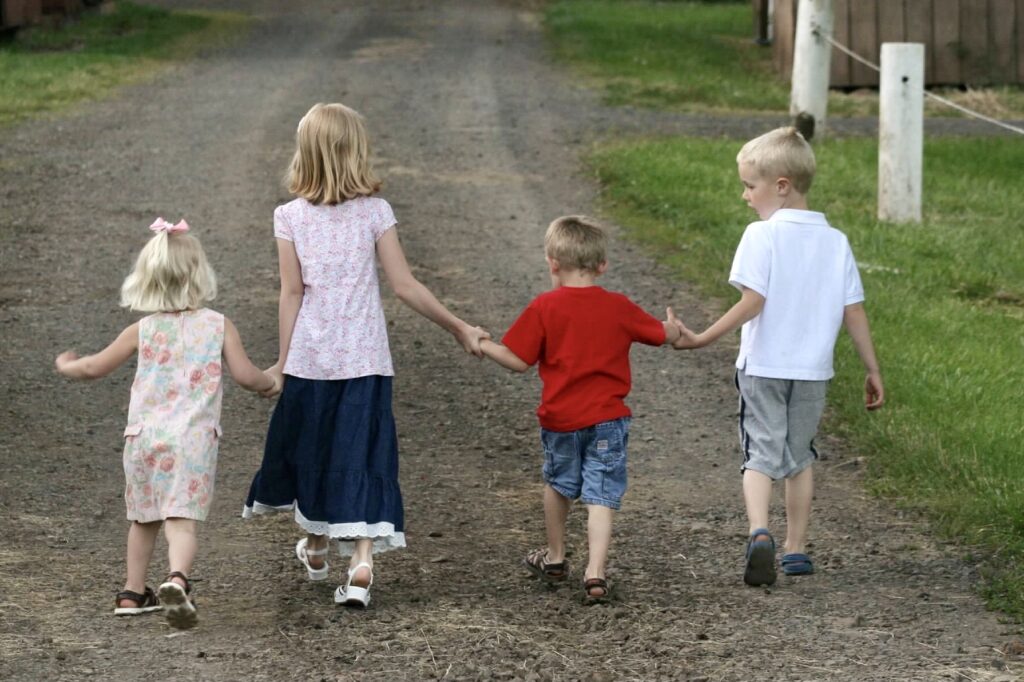
we still want to walk together.
In everything you do -eat, play, and love- may it always be Seasoned with Joy!
Explore Similiar Posts:

This post contains affiliate links, which means I make a small commission at no extra cost to you. Unless stated otherwise, I will only recommend products I personally enJOY. See my full disclosure here.